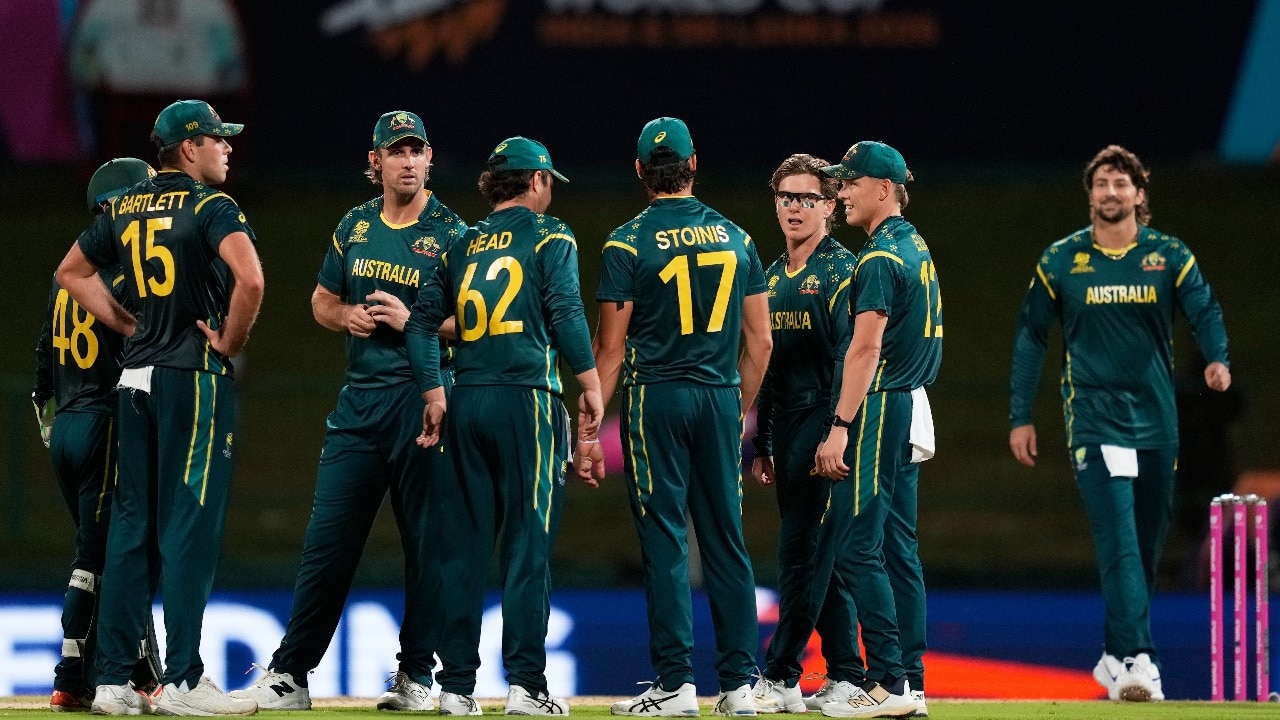
Travis Head Strongly Refutes Claims of Lacking Australia Cricket Commitment Post T20 World Cup Exit
The aftermath of Australia's unexpected early exit from the ICC T20 World Cup 2026 has been nothing short of a firestorm, with fans and pundits alike scrutinising every aspect of the team's performance. For a nation accustomed to cricketing dominance, crashing out in the group stage for only the second time in the tournament's history – despite being champions in 2021 – sent shockwaves through the cricketing world. Amidst the intense criticism, which included suggestions that Australia cricket commitment to the T20 format was lacking, star opener Travis Head has stepped forward with a powerful rebuttal, asserting that the team's dedication was unequivocal.
Head's candid remarks directly address the swirling narrative that Australia prioritises Test and ODI cricket, entering T20 tournaments underprepared or with less intent. His unequivocal stance aims to clarify the internal perspective of the squad, distinguishing between disappointing results and a perceived deficit in effort or focus. This article delves into the specifics of Australia's World Cup campaign, the public reaction, and Travis Head's emphatic defence of his team's commitment.
The Shocking Exit: A Recap of Australia's T20 World Cup 2026 Campaign
Australia, led by Mitchell Marsh, entered the T20 World Cup 2026 with high hopes, especially as recent champions. Placed in Group B, their campaign began positively with a comfortable victory over Ireland, signaling their intent. However, the initial optimism quickly dissipated as the team encountered unforeseen hurdles. What followed were back-to-back defeats that severely compromised their chances of advancing to the Super 8 stage.
- Positive Start: A dominant win against Ireland.
- Stumbling Blocks: Consecutive losses to Zimbabwe and Sri Lanka, which significantly altered their net run rate and standing within the group. These defeats were particularly damaging, as both Zimbabwe and Sri Lanka were considered strong contenders but not necessarily insurmountable obstacles for a team of Australia's calibre.
- Rain-Affected Fate: The final blow came not directly from an Australian loss, but from a rain-affected washout between Ireland and Zimbabwe. This result mathematically sealed Australia's elimination even before they played their final group game against Oman.
- Comfortable but Irrelevant Win: Although Australia went on to defeat Oman convincingly, the victory was purely for pride and did nothing to change their position in the standings.
The sequence of events left many questioning not just the team's performance, but also the underlying factors contributing to such a surprising early departure. For a deeper dive into the factors behind their early departure, read Australia's T20 World Cup Exit: Did Commitment Truly Falter?
Public Scrutiny and the "Lack of Commitment" Narrative
In the wake of their early exit, the Australian team faced a barrage of criticism. Social media buzzed with harsh comments, and traditional media outlets echoed the sentiment of disappointment and disbelief. A significant portion of this backlash centered on the perception that Australia, historically dominant in Test and One-Day International (ODI) formats, does not accord T20 cricket the same level of seriousness or preparation. This narrative suggested a fundamental flaw in Australia's approach to the shortest format, implying that players might not be fully invested or that the setup was geared more towards the longer versions of the game.
Critics pointed to a perceived lack of T20 specialists in the squad, an over-reliance on multi-format players who might be fatigued, and preparation schedules that seemed to prioritise other commitments. The argument was that while Australia might have world-class cricketers, their collective australia cricket commitment specifically to the T20 World Cup felt diluted. This public opinion often stems from past triumphs and an expectation of continuous success, leading to harsh judgments when results fall short.
Travis Head's Adamant Defense: 100% Commitment, No Compromise
It was against this backdrop of widespread criticism that Travis Head delivered his powerful and unambiguous response. Speaking to reporters, Head firmly rejected the notion of any wavering commitment, stating that from both a player’s and a team’s perspective, there was "100 percent commitment to everything." His words were a direct challenge to the critics, underlining the professional ethos within the Australian camp.
Head emphasized a crucial point: "There's no one format that plays bigger than any other. You're playing a World Cup we carve that out and we plan as best we can." This statement is fundamental to understanding the modern professional cricketer's mindset. In an era where international schedules are packed, and players participate across all three formats, compartmentalizing focus for a major tournament like a World Cup is standard practice. The idea that a team would deliberately underperform or lack dedication in such a high-stakes competition defies logic for professional athletes.
Furthermore, Head insightfully suggested that the perception might be more a reflection of public preference than team reality: "I think it's probably more a public opinion that so many more people love Test cricket more than they love T20 cricket." This highlights a potential disconnect between fan sentiment and professional sporting reality. While fans might have their favourite format, players are driven by the opportunity to represent their country and win silverware in any format, making the notion of a lesser commitment highly improbable.
Distinguishing Poor Performance from Lack of Effort
While vehemently defending the team's commitment, Travis Head did not shy away from acknowledging the reality of their performance. He candidly admitted, "We weren't good enough." This distinction is critical. Poor performance, whether due to tactical errors, individual mistakes, tough conditions, or simply being outplayed by stronger opponents on the day, is a tangible outcome in sports. It does not automatically equate to a lack of effort or dedication.
Head articulated this nuance perfectly: "A lot of people would draw long bows when Australian cricket teams don't win... So everyone can draw their own conclusions, but we know as a team we were fully committed." This statement underscores the internal belief system of the squad. Players know the effort they put in, the sacrifices they make, and the mental and physical toll of competing at the highest level. From their perspective, being "not good enough" is a performance issue, not a commitment issue. It implies that perhaps strategies need rethinking, skills need refining, or better adaptation is required, but certainly not a deficit of australia cricket commitment.
Beyond the Blame Game: What Lessons Can Be Learned?
While Travis Head's defence solidifies the internal perspective on Travis Head: Australia Showed 100% T20 World Cup Commitment Despite Exit, the early exit still demands introspection. If commitment wasn't the issue, then what factors might have contributed to Australia's underwhelming performance? Here are some areas for consideration:
- T20 Specialisation: The T20 format has evolved significantly, demanding specialist skills in all departments. While Australia possesses immense talent, perhaps a deeper look into T20-specific roles and player combinations is warranted, ensuring the right players are deployed for specific match situations and conditions.
- Adapting to Conditions: World Cups are often played in diverse conditions. The ability to quickly adapt to different pitches, ground dimensions, and weather patterns is paramount. Australia might need to review their preparation strategies to better simulate potential challenges.
- Tactical Execution Under Pressure: Even with commitment, tactical missteps or failures in execution during high-pressure moments can be decisive in T20s, where momentum shifts rapidly. This includes everything from bowling changes to batting approaches.
- Opponent Strength: It’s also crucial to acknowledge the increasing competitiveness of international cricket. Teams like Zimbabwe and Sri Lanka, while perhaps not always at the top, are capable of delivering match-winning performances on their day, especially against complacent or slightly off-form opponents.
The Future of Australia's T20 Strategy
Moving forward, Australia's cricket leadership faces the challenge of dissecting this World Cup campaign without succumbing to emotional reactions. If commitment is indeed 100%, as Head suggests, then the focus must shift entirely to performance metrics, tactical frameworks, and player development within the T20 landscape. This could involve:
- Dedicated T20 Calendars: Ensuring sufficient preparation time and opportunities for T20 specialists to hone their craft, possibly through more focused bilateral series or domestic T20 league exposure.
- Data-Driven Selection: Utilizing advanced analytics to identify players best suited for specific T20 roles and conditions, rather than relying solely on multi-format stars.
- Psychological Preparation: Enhancing strategies to manage the immense pressure of World Cup tournaments, ensuring players can execute their skills effectively even when the stakes are highest.
Travis Head’s powerful statement serves as a reminder that behind every team’s performance, there's a human element of effort and dedication that often goes unseen or is misjudged by external observers. While results are the ultimate arbiter in sports, drawing "long bows" of a lack of australia cricket commitment might be a premature and unfair conclusion.
In conclusion, Travis Head's firm rejection of claims questioning Australia's commitment post-T20 World Cup exit is a crucial intervention. It forces a re-evaluation of the narrative, urging critics and fans alike to differentiate between disappointing performance and a fundamental lack of dedication. While the results were undeniably poor, Head’s assertion of "100 percent commitment" redirects the focus towards genuine cricketing issues that need addressing, rather than questioning the very spirit of the Australian team. The challenge now lies in learning from this experience and refining strategies to ensure future T20 campaigns reflect both the team's unwavering commitment and their customary success.