Australia's T20 World Cup Exit: Did Commitment Truly Falter?
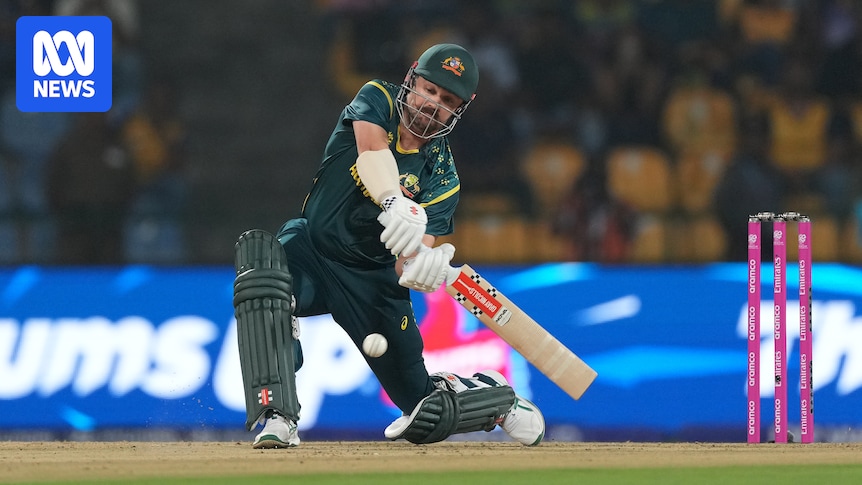
The echoes of Australia's surprising early departure from the ICC T20 World Cup 2026 continue to reverberate through the cricketing world. As cricketing giants like South Africa, New Zealand, England, and India battled it out in the semi-finals, the reigning 2021 champions found themselves on the sidelines, igniting a fierce debate about their approach to the shortest format. While fans and pundits were quick to question the team's dedication and preparation, a strong rebuttal has come from within the camp, led by star opener Travis Head, who vehemently denies any wavering in Australia cricket commitment.
The unexpected exit, only the second time in the tournament's history Australia has failed to move past the group stage, sparked a torrent of criticism. Many observers suggested that the Australian cricket ecosystem prioritizes Test and One Day International (ODI) formats, leading to underpreparation and a perceived lack of seriousness when it comes to T20s. However, Head's staunch defense challenges this narrative, forcing a deeper look into the complexities of professional commitment, performance, and public perception.
The Shocking Exit: A Recap of Australia's T20 World Cup 2026 Campaign
Led by captain Mitchell Marsh, Australia entered the T20 World Cup 2026 with the weight of expectation. Placed in Group B, their campaign began promisingly with a convincing victory over Ireland. This initial success, however, proved to be a false dawn. The cracks in their armor soon appeared, culminating in back-to-back defeats against Zimbabwe and Sri Lanka. These losses were not just setbacks; they severely compromised Australia's chances of advancing to the next stage, sending shockwaves through their ardent fan base.
The situation was compounded by external factors. A rain-affected washout between Ireland and Zimbabwe effectively sealed Australia's fate, eliminating them from the tournament even before their final group game against Oman. Despite securing a comfortable win against Oman, the result was purely academic; their position in the standings remained unchanged, and their World Cup journey had ended prematurely. For a team known for its formidable presence in global tournaments, this early exit was not just disappointing, but truly a moment of reckoning.
Public Outcry vs. Player Perspective: The Commitment Debate
The aftermath of Australia's exit was characterized by widespread public criticism. Fans and media alike scrutinized every aspect of the team's performance, from preparation and tactical decisions to the perceived "intent" of the players. Many pointed to Australia's historical dominance in Tests and ODIs as evidence that the T20 format might not receive the same level of focus or respect within the cricketing establishment. The narrative that Australia entered the tournament underprepared, with key players perhaps not fully invested, gained significant traction.
However, Travis Head, a key figure in the Australian batting lineup, strongly refuted these allegations. Speaking candidly, Head asserted that from both a player's and a team's perspective, there was "100 percent commitment to everything." He emphasized that no single format holds greater significance than another when representing the nation, especially in a World Cup. "There's no one format that plays bigger than any other. You're playing a World Cup we carve that out and we plan as best we can," Head stated, challenging the notion that T20 cricket is taken less seriously. He attributed much of the criticism to a public sentiment that often champions Test cricket above all else.
While acknowledging the team's subpar performances in crucial matches, Head drew a clear distinction between poor results and a lack of effort or dedication. "We weren't good enough. So everyone can draw their own conclusions, but we know as a team we were fully committed," he reiterated. This perspective highlights a crucial point: commitment, while essential, does not automatically guarantee victory. Even with full dedication, execution can falter, and opposition teams can simply perform better on the day. For more on Travis Head's specific comments, read Travis Head Rejects Lack of Commitment Claims Post T20 World Cup Exit.
Dissecting the "Commitment" Argument: Beyond Black and White
The debate around Australia cricket commitment is rarely as simple as a yes or no answer. While players like Travis Head can genuinely express 100% commitment, public perception is often shaped by a confluence of factors that go beyond individual intent.
- Historical Context and Perception: Australia's legacy is built on Test match grit and ODI ruthlessness. The T20 format, relatively newer and often seen as a spectacle, sometimes struggles to command the same gravitas in the public imagination, leading to assumptions about the team's priorities.
- Scheduling and Player Load: Modern cricketers are multi-format athletes, navigating demanding schedules across international duties and franchise leagues. While players may be committed, the sheer volume of cricket can lead to physical and mental fatigue, potentially impacting performance even with the best intentions. Was the T20 World Cup simply one tournament too many in a grueling year?
- Preparation Windows: Was there sufficient, dedicated preparation time for this specific T20 World Cup? Unlike Test series, where preparation can be highly focused, T20 World Cups often follow immediately after other formats or franchise commitments, limiting specialized training camps. A team might be "committed," but a lack of optimal preparation can manifest as poor performance.
- Squad Dynamics and Specialization: The balance between established multi-format stars and specialist T20 players is always a challenge. Are enough dedicated T20 specialists being nurtured and selected, or is there an over-reliance on players whose primary focus and skill sets are tailored to longer formats?
Practical Lessons for Future T20 Campaigns:
To bridge the gap between perceived commitment and actual performance, and to manage public expectations, future Australian T20 campaigns could consider several strategies:
- Dedicated T20 Pathways: Invest further in specialized T20 development programs and domestic leagues to nurture a distinct pool of T20 talent. This ensures a deeper bench of players intrinsically skilled and committed to the format.
- Strategic Scheduling & Rest: Collaborate with cricketing bodies to ensure adequate rest and dedicated preparation windows for major T20 tournaments, minimizing player burnout.
- Tailored Training Camps: Implement intensive, condition-specific T20 training camps well in advance of tournaments, focusing on unique T20 tactics, power hitting, death bowling, and fielding demands.
- Clear Communication: Proactively communicate the team's commitment and preparation strategies to the public. Transparency can help manage expectations and counter negative narratives.
- Post-Tournament Review: Conduct thorough, objective reviews not just of individual player performances, but of overall strategy, team selection, and preparation methodologies to identify specific areas for improvement, separating genuine commitment from execution failures.
The Road Ahead: Learning from Disappointment
Australia's early exit from the T20 World Cup 2026 serves as a stark reminder that past glories offer no guarantee of future success, particularly in the ever-evolving landscape of T20 cricket. Travis Head's impassioned defense of the team's commitment highlights the internal belief that dedication was never an issue. However, the external scrutiny points to a broader conversation about how that commitment translates into tangible results, especially when set against the backdrop of an incredibly competitive global circuit.
The challenge for Australian cricket now lies in introspection: not just to analyze where performances fell short, but to understand and address the disconnect between player intent and public perception. While commitment may have been 100 percent, the results clearly weren't. This necessitates a strategic recalibration – one that ensures that the passion and dedication of the players are supported by optimal preparation, astute tactical planning, and a deep understanding of the unique demands of modern T20 cricket. Learning from this disappointment, rather than dwelling on blame, will be crucial for Australia to reclaim its formidable standing in all formats of the game.