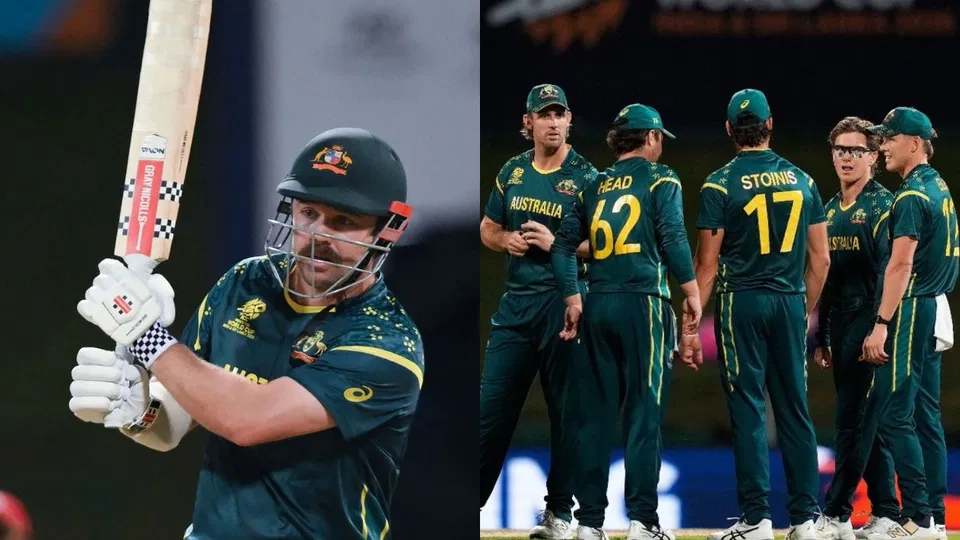
Travis Head: Australia Showed 100% T20 World Cup Commitment Despite Early Exit
The world of cricket was left stunned by Australia's unexpected early exit from the ICC T20 World Cup 2026. As a team accustomed to deep runs and championship victories, their failure to progress beyond the group stage for only the second time in tournament history triggered a wave of criticism. Among the most potent accusations was the claim that Australia simply doesn't take T20 cricket seriously, prioritizing Tests and ODIs instead. However, star opener Travis Head has unequivocally rejected these allegations, making a passionate case for the enduring
australia cricket commitment across all formats.
Head’s forceful rebuttal aims to clarify a crucial distinction: poor performance does not equate to a lack of dedication. While the results in the tournament were undeniably disappointing, Head insists that from both a player and team perspective, there was absolute commitment to the T20 World Cup campaign. This article delves into the details of Australia's challenging journey, Head's powerful defense, and the broader implications for the perception of Australian cricket's dedication to the shortest format.
The Unforeseen Exit: Australia's T20 World Cup 2026 Campaign Reviewed
Australia entered the T20 World Cup 2026 as reigning champions from 2021, a status that naturally brought high expectations. Placed in Group B under the leadership of Mitchell Marsh, their campaign began promisingly with a convincing victory over Ireland. This initial success seemed to confirm their status as contenders, but the narrative quickly took an unforeseen turn.
The subsequent matches saw a dramatic shift in fortunes. Australia suffered back-to-back defeats against Zimbabwe and Sri Lanka, results that severely hampered their chances of advancing to the Super 8 stage. These losses were not just unexpected but critical, placing immense pressure on their remaining fixtures and significantly diminishing their net run rate. The T20 format is notoriously unforgiving, and these consecutive missteps proved incredibly costly.
The final blow came not from their own bat or ball, but from the heavens. A rain-affected match between Ireland and Zimbabwe ended in a washout, sharing points between the two teams. This result, before Australia could even play their final group game, mathematically eliminated them from the competition. Despite going on to comfortably defeat Oman in their last match, the damage was already done; their position in the standings remained unchanged, confirming their early departure. This sequence of events fueled public outcry, with many fans and pundits questioning the team's preparation, intent, and overall
australia cricket commitment to the T20 format. For a deeper look into the questions raised, read
Australia's T20 World Cup Exit: Did Commitment Truly Falter?
Travis Head's Stance: 100% Commitment, No Format Bias
In the wake of the team's exit and the ensuing criticism, Travis Head emerged as a staunch defender of his teammates' professionalism and dedication. Speaking to reporters, Head was resolute in his message: the claims of a lack of commitment to T20 cricket are simply false.
"The players' perspective and a team perspective, there's 100 per cent commitment to everything," Head stated emphatically. His words directly challenged the popular narrative that Australian cricketers somehow view T20s as less significant than the longer formats. "There's no one format that plays bigger than any other. You're playing a World Cup we carve that out and we plan as best we can." This statement highlights the meticulous preparation and strategic focus that goes into every World Cup campaign, regardless of format. For Head, a World Cup inherently commands maximum respect and effort.
Head also acknowledged the source of some of the public's perception, suggesting that it might be more of a reflection of fan preferences rather than player priorities. "I think it's probably more a public opinion that so many more people love Test cricket more than they love T20 cricket," he mused. This insight points to a potential disconnect between fan sentiment and the professional realities of modern multi-format cricketers. For players, representing their country at any World Cup is the pinnacle, and the
australia cricket commitment to excellence remains unwavering across all disciplines. Head’s comments underscore the seriousness with which the team approaches every international fixture, particularly a global tournament. More on Head's response can be found in
Travis Head Rejects Lack of Commitment Claims Post T20 World Cup Exit.
Performance vs. Dedication: Drawing the Line
A crucial aspect of Travis Head's defense is his clear differentiation between subpar performance and a lack of commitment. While he firmly rejected any accusations of insufficient effort or dedication, he was equally upfront about the team's on-field shortcomings.
"A lot of people would draw long bows when Australian cricket teams don't win," Head admitted, recognizing the tendency for critics to seek deeper, often negative, explanations for failure. "We weren't good enough. So everyone can draw their own conclusions, but we know as a team we were fully committed."
This statement is vital. In elite sports, even with 100 percent commitment and thorough preparation, victory is never guaranteed. The margins in T20 cricket are incredibly fine, and a few dropped catches, misjudged deliveries, or unfortunate umpiring decisions can swing a match. Head's perspective acknowledges that the team simply failed to execute effectively in crucial moments. This doesn't imply a lack of effort during training, strategic planning, or application on the field. Instead, it speaks to the inherent unpredictability of sport and the brutal reality that sometimes, despite one's best efforts, things just don't go your way.
The professional athlete’s commitment involves:
*
Rigorous Training: Adhering to strict fitness regimes and skill development.
*
Strategic Planning: Participating in detailed game planning and opposition analysis.
*
Mental Fortitude: Maintaining focus and composure under immense pressure.
*
Team Cohesion: Working collaboratively towards a common goal.
Head's message is a reminder that scrutinizing results alone can be misleading. While results are the ultimate measure in sport, the process, effort, and dedication behind them are equally important. The challenge for fans and media alike is to separate the outcome from the underlying commitment, especially for a team with a proven track record of fierce competition like Australia.
Beyond the Blame Game: What Does it Mean for Australian Cricket?
Travis Head's strong defense serves as more than just a rejection of criticism; it opens a dialogue about the broader challenges and perceptions surrounding
australia cricket commitment in a multi-format era. The T20 World Cup 2026 exit, while disappointing, provides an opportunity for introspection and strategic reassessment rather than simply a blame game.
1.
Managing Multi-Format Demands: Elite Australian cricketers are often central figures in Tests, ODIs, and T20Is, alongside domestic and franchise leagues. Balancing physical demands, mental freshness, and format-specific skills is a monumental task. The T20 World Cup campaign might highlight the need for even more specialized preparation windows or squad management strategies.
2.
Perception vs. Reality: Head’s comments underscore that public perception (e.g., preference for Test cricket) can sometimes overshadow the players’ professional outlook. Cricket Australia might need to consider how they market and elevate the T20 format, especially given its global popularity and commercial significance. Building a consistent, dominant T20 side is crucial for maintaining relevance and inspiring new fans.
3.
Learning from Failure: Every major tournament exit, no matter how committed the team, offers valuable lessons. Analyzing the specific tactical shortcomings, player roles, and execution failures can lead to robust improvements. This is not about questioning dedication but enhancing performance strategies.
4.
Reinforcing Culture: Australia's sporting identity is built on competitiveness and a 'never say die' attitude. Head's insistence on 100% commitment reinforces this core cultural value, reminding everyone that while losses happen, the fundamental drive to win remains. For players, this means continuing to pour their effort into every game, knowing that external judgment sometimes overlooks internal dedication.
Moving forward, the focus for Australian cricket will undoubtedly be on rebuilding their T20 credentials. This involves not just winning matches but also demonstrating a sustained competitive edge that leaves no room for doubt about their commitment to the shortest format. For a team of Australia’s stature, consistency across formats is a hallmark, and ensuring T20 success is paramount for their global standing.
Conclusion
Travis Head’s resolute defense of Australia’s T20 World Cup commitment serves as a crucial reminder that in the demanding world of professional sport, effort and outcome are not always synonymous. While Australia's early exit from the ICC T20 World Cup 2026 was undeniably a shock and a disappointment, Head’s statements vehemently counter the narrative of a team lacking dedication to the T20 format. He passionately articulated that from a player's and team's perspective, there was "100 percent commitment," emphasizing that all World Cups are treated with the utmost seriousness.
Head acknowledged that the team simply "weren't good enough" in crucial moments, drawing a clear distinction between performance deficiencies and a perceived lack of dedication. This perspective offers a valuable lesson for fans and pundits alike: understanding the complexities of elite sports requires looking beyond results to appreciate the immense effort and strategy involved. The
australia cricket commitment remains strong, even when the scoreboard doesn't reflect it. Moving forward, Australian cricket will undoubtedly channel this commitment into a renewed focus on T20 success, aiming to silence critics with their future performances and reclaim their dominant status across all formats of the game.